
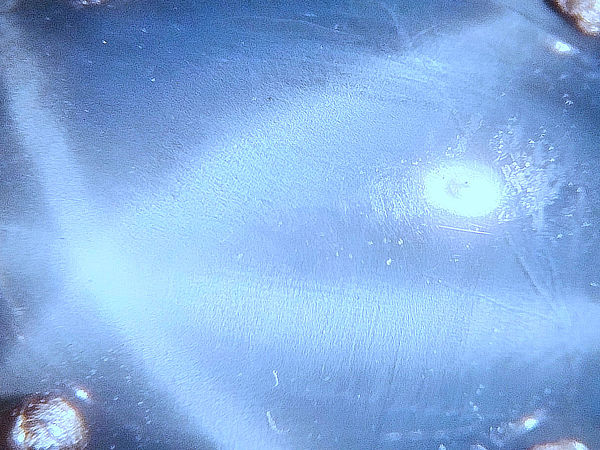
Above A very good quality Star Sapphire
Click here
for larger image, opens in a new tab.
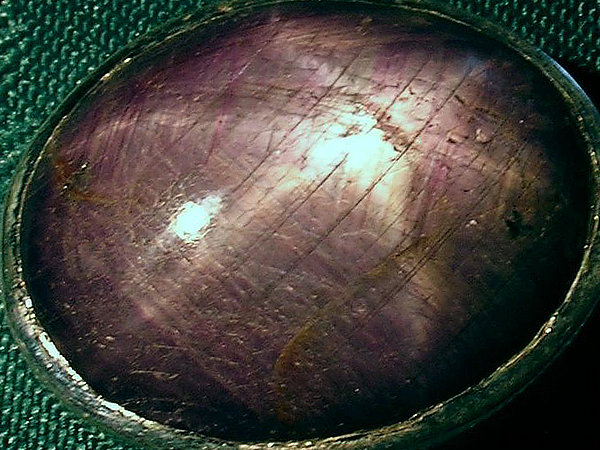
Above: A star ruby in a silver mount.
Below: Detail of the same stone seen through the microscope.
The intersecting rutile needles are visible. This picture was taken with
the Dino Eye camera.
Click here for larger image,
opwna in a new tab.
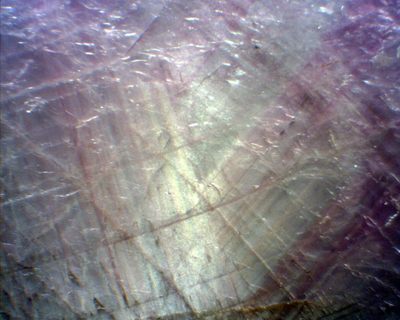
6 pointed stars are the most common, but 12 pointed stars can occur.
The gems include rutile needles in an organised pattern, and it’s the reflection off
these needles which form the star, the glow is at right angles to the needles..
It’s similar to the reflection from a reel
of cotton.
The star seems to move around as the stone is moved, and is not centred on the light source.
The effect is delightful
They are rather rare these days. Most gems are heat-treated to improve clarity,
and this dissolves the rutile needles. This heat treatment is done before the stones
are carefully examined, so most are lost..
The stones are hard, and are unlikely to be damaged in normal wear, household dust will not scratch them. However, like most gems, they are somewhat brittle, and a hard knock can chip them. They are easily cleaned with any proprietary cleaner or detergent, but do check out our advice on cleaning jewellery. If the jewellery is valuable, it’s wise to obtain professional help.
You are unlikely to encounter treated stones, as noted above heat treatment to improve clarity will destroy the star. However synthetic star rubies were first marketed in 1947. Be cautious if buying a good quality stone (synthetics are nearly always good quality), and only buy from a reputable source.