WREXHAM, NORTH WALES
In brief
Wrexham is the largest town in North Wales. Although it is
only 4 miles from the English border, it is a major shopping
centre for Wales - some customers come over 40 miles to our
shop.
Being so close to the border means the town shows both English
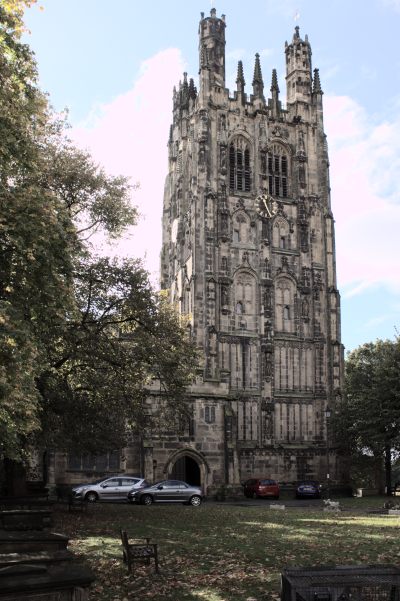
and Welsh influence. The church is English in style, and the
course of both Offa’s and Wat’s Dykes - ancient
earthworks dividing England from Wales - would put Wrexham in
England. However in many other ways, the town is definitely
Welsh, and quite often we hear Welsh spoken in the streets.
The beginning
In many countries, the founding of the town was documented, and we know the exact date settlers arrived, and when the church was built. This is not the case here. First people came, then at a later date we have a written record referring to the settlement.
1161: first record of the town by name, as the location of a motte and bailey (in Erddig Park)
1120: The parish church is mentioned, it has since been rebuilt
1391: The market was helping the town to grow.
The town became an important point on the drovers’ route from Wales into England, as well as a market town.
Industries included wool and leather. Burgess plots have been identified at Town Hill, confirming its medieval
origin.
The market was very important, and streets (including High St, Town Hill, Hope St, and Charles St) were
widened for the stalls.
The church was rebuilt in the late 15th and early 16th Centuries. It’s a beautiful Gothic church, with
exceptional wall paintings inside.
When the industrial revolution started, the town was close to important sources of coal, lead, ironstone, and lime.
At Bersham, about 2 miles from the town, a method of accurately drilling cannon bores (and steam engine
cylinders) was developed. Without this invention, early steam engines would have been much less efficient.
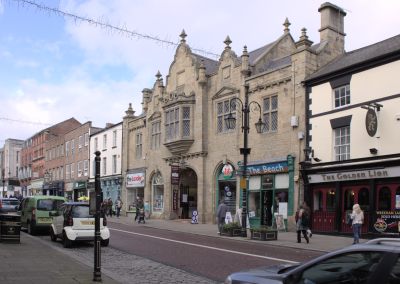
With industry came commerce, and banks and other financial institutes established grand building in the town centre.
Links
Wikipedia on the history of Wrexham
Listed buildings With its good index, this site describes every grade 1 and 2 listed building in Wrexham. Very useful when exploring.