Iolite
An attractive blue-violet stone. A complex silicate of magnesium and aluminium.
Unusual Optical Quality
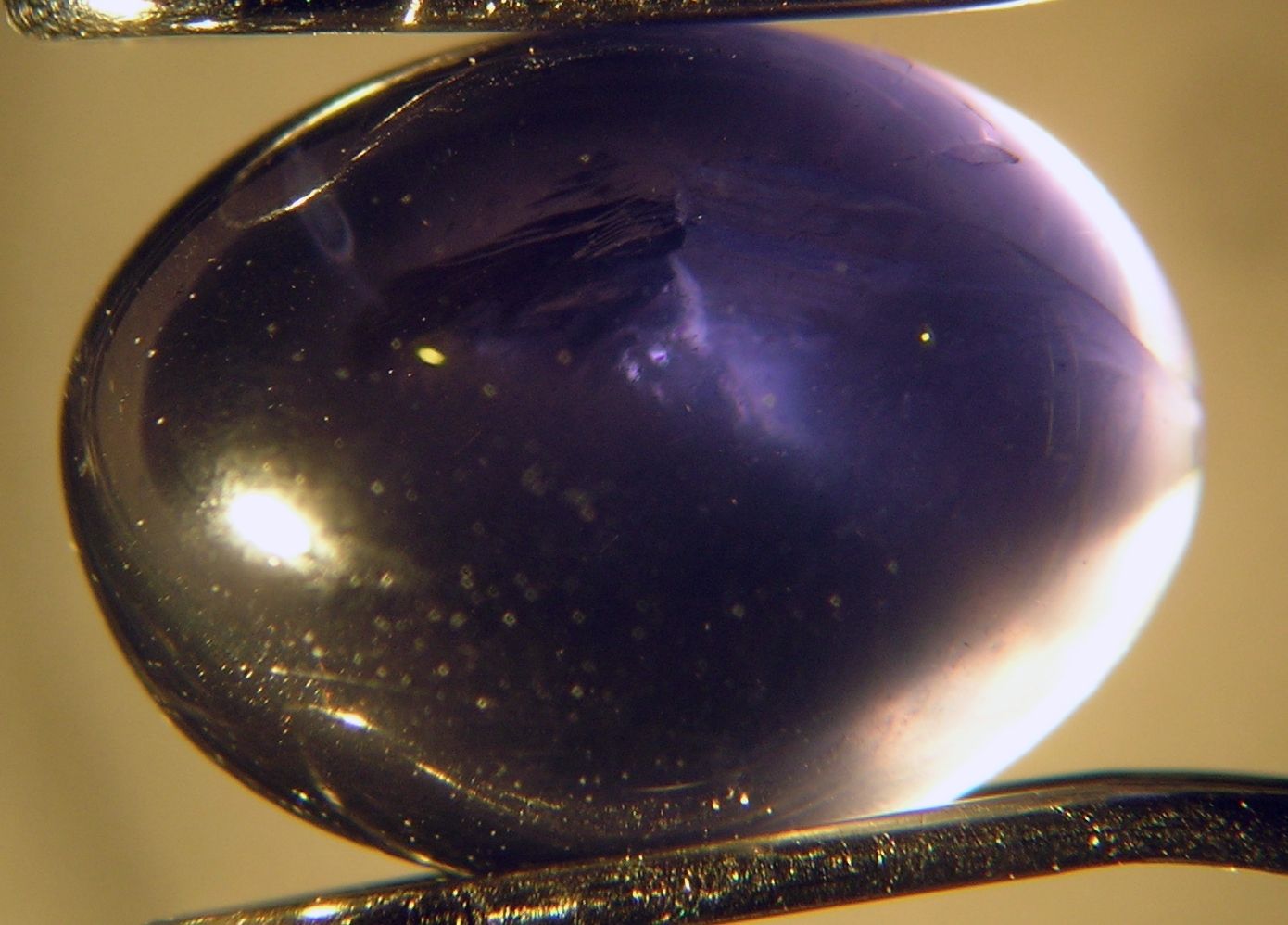
We only recently had the chance to examine an unmounted
stone. The owner knew nothing about it, so we wanted to
identify it for him. We first admired its beautiful colour,
then under the microscope I turned it sideways. To my
amazement the colour had vanished! The stone now looked
transparent. And that's its strange quality, caused by
its crystal structure. At once we could identify the stone
(after carefully checking it wasn't a doublet, which can
sometimes produce similar effects).
The stone requires careful cutting to ensure its colour
is seen when viewed from above. Cut it badly, and it
will lose its colour.
Why the Vikings prized Iolite
When boats navigate without a compass they rely on the sun. And that can be a problem when it's cloudy. But Iolite works like a polarising filter, so can be used to work out the sun's position. Because light from the sky is polarised, it looks darker according to its angle from the sun. Bees also tell the direction of the sun by using polarised light.
Caring for Iolite
It can be cracked by hard blows. Like many semi-precious
stones it will get scratched by the grit in household dust, so do
not wear it when doing manual work.
Cleaning is simple. If necessary it can withstand soaking
in hot water. It can be cleaned with jewellery
cleaner.
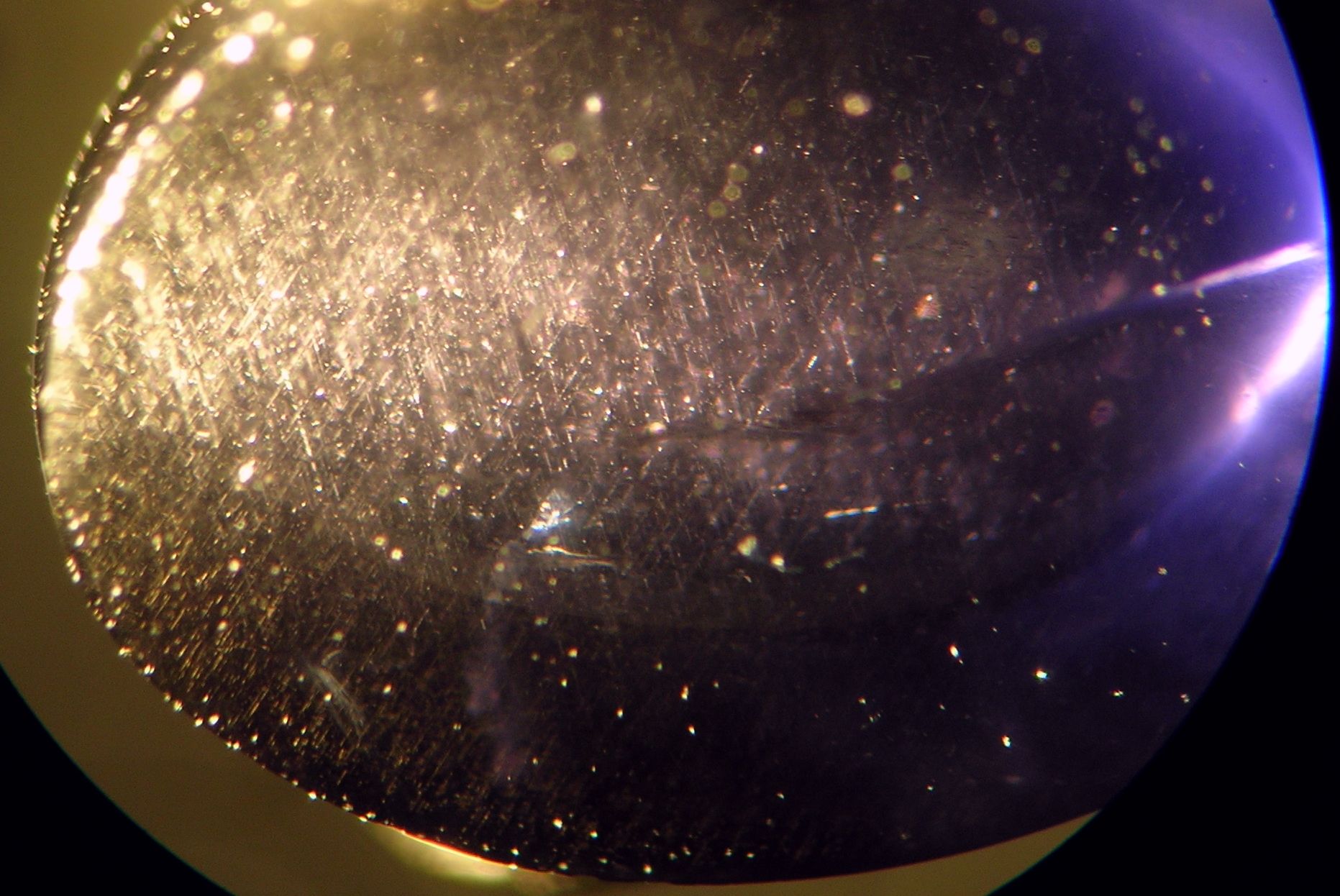
 Above: The same stone viewed from the back. Most of the stone is visible
in the larger image, but this picture just shows a small detail.
Note the triangular pattern, caused by what look like strings of
bubbles in the crystal structure. This gives the stone a very
faint star, visible when viewed, but not in our pictures here.
Above: The same stone viewed from the back. Most of the stone is visible
in the larger image, but this picture just shows a small detail.
Note the triangular pattern, caused by what look like strings of
bubbles in the crystal structure. This gives the stone a very
faint star, visible when viewed, but not in our pictures here.