.jpg)
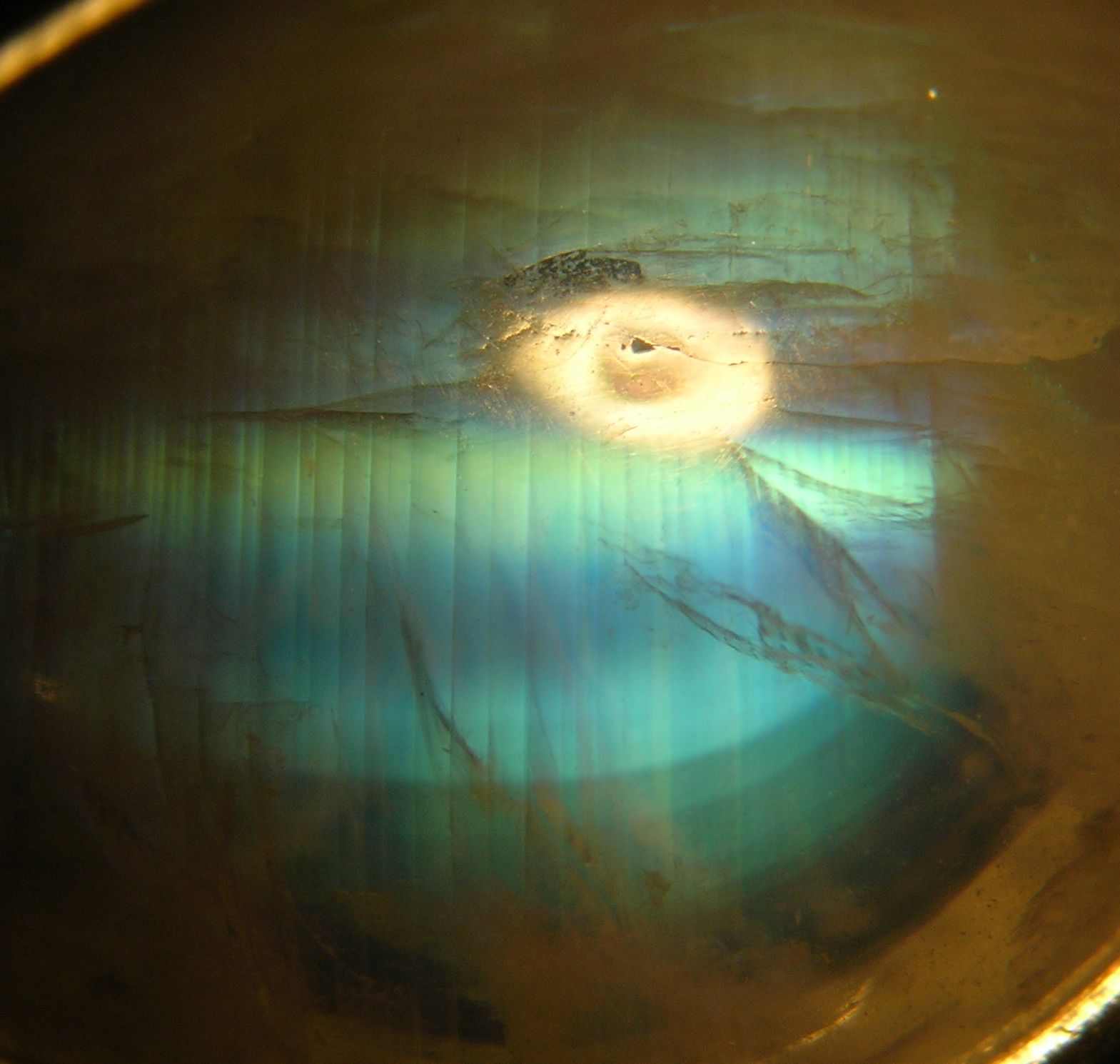
Moonstone illuminated from the side. Small black inclusions are common in moonstones,
there is also a fracture plane close to the inclusions.
Click here for a larger image.
.jpg)
The same stone lit from above - you can see the reflection of the light.
The light patches move as you turn the stone, that's what makes moonstone special
Above
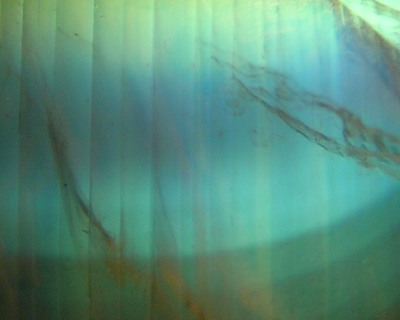
The thick orthoclase layers are clearly visible, separated by the thin albite layers, which show as lines. The dark
patches are fracture planes
Click here
for a larger image. The
white oval near the top of the larger picture is the
microscope light reflected by the stone.
Normally I make sure this reflection is not visible, however when
I moved the light so that its reflection was not visible, the
plates disappeared!
Back to top
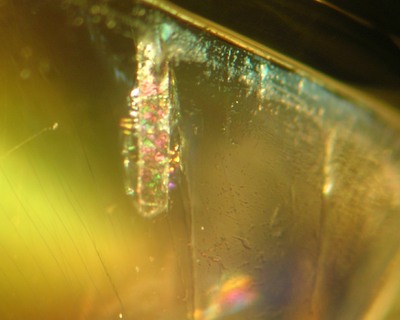
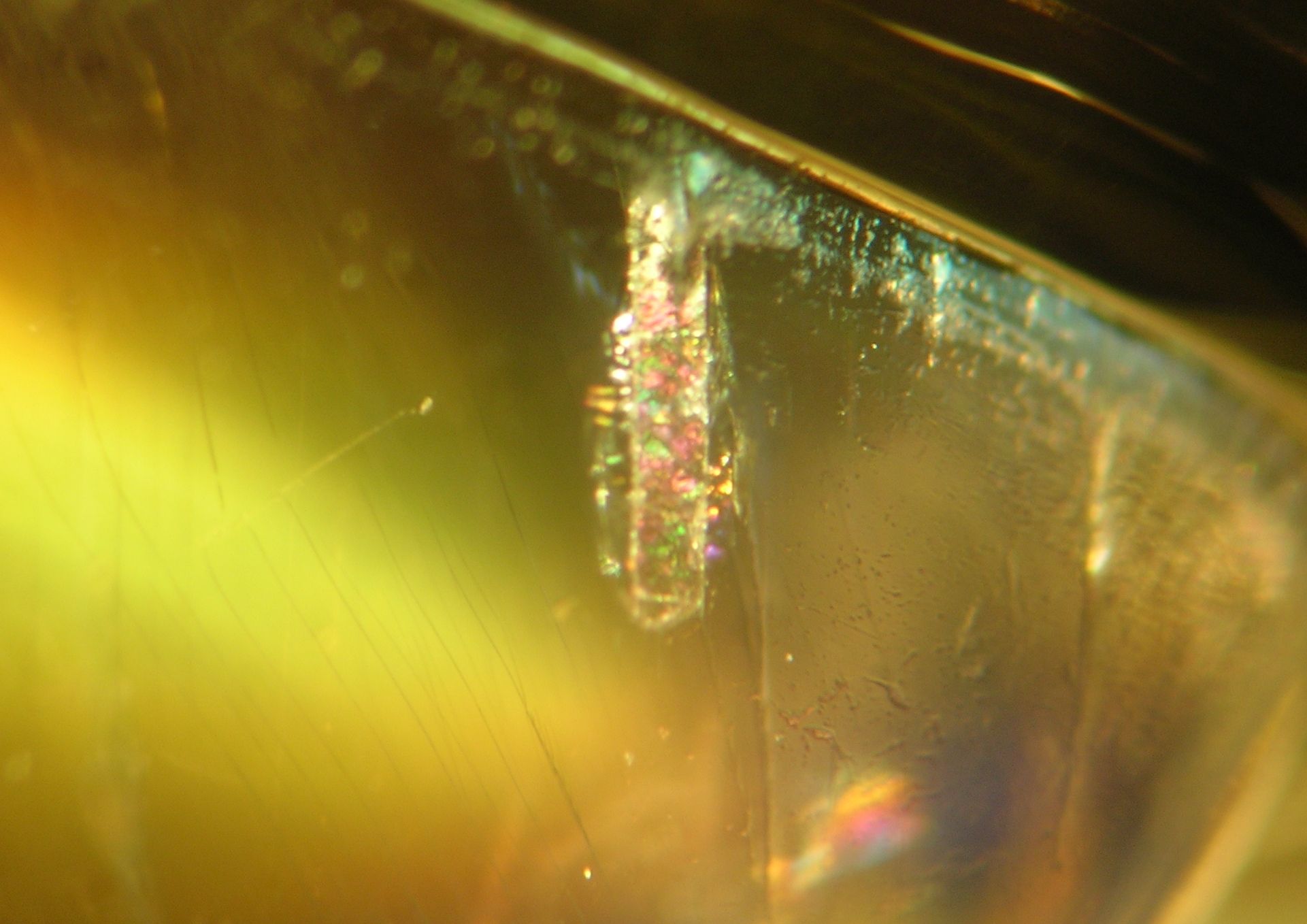
Detail of a high quality moonstone. This fracture is right at the
edge so does not devalue the stone. Note the iridescence, also
the plates which give the stone its distinctive appearance are
just visible. This gem is actually blue but is mounted in gold,
that's why it looks golden in this picture.
Click here for larger
image
What are moonstones?
They are a type of feldspar, which is the most common mineral
on earth. so what makes them special?
First like most gemstones, they are crystalline. But the
gems consist of plates of two different types of feldspar,
arranged alternately. Light shining through the stone is
refracted by these plates, to emerge as a striking glow, which
shifts unexpectedly as the stone is moved.
The best moonstones are transparent blue. However high
quality stones are rare; many are translucent,
with different colours.
The name comes from the old belief that the glow looks like
moonlight. In India they were believed to bring good
dreams. Moonstones are the birthstone for June.
Sunstones
show a similar band of light, but the cause is completely different.
Treatments before purchase
I am not aware of any major dangers here. Synthetic
moonstone does exist, but is rare.
Caring for Moonstones
The stones are soft, and can be scratched by dust etc, so do
not wear them when doing manual work. They should not
come in contact with any jewellery cleaner, but can be washed
with lukewarm water.
Back to top

_large.jpg)