White Metals used in Jewellery
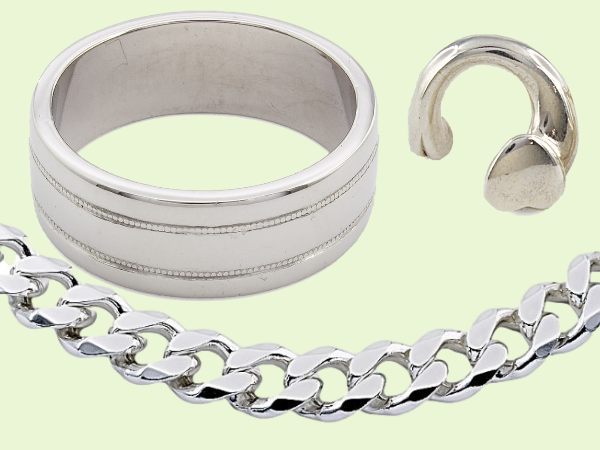
Silver
White gold
Platinum
Palladium
Titanium
Silver
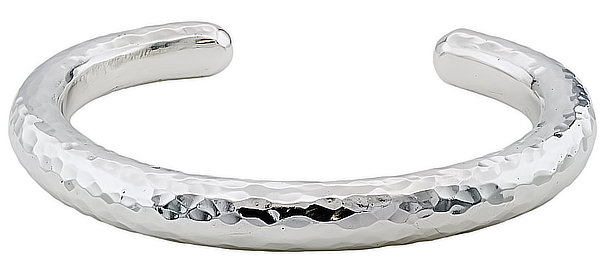
This solid torque bangle weighs 124g! Silver is ideal, the price is reasonable,
and the metal shows fine detail
Slightly harder than gold in its pure form. In most
countries silver jewellery is purer than gold - normally 92.5% of
the alloy is silver, but in some countries 80% is normal. Because
the alloy is purer than gold - and it is the alloying which gives
both gold and silver additional strength, items made from silver
are softer than those made from gold.
For the craftsman it is somewhat harder to work than gold, but as
the metal is cheaper, it is more practical to produce large
items. When new the metal will take a brilliant polish, which
with normal wear slowly ages to a rich sheen. Compared to chrome
plate and steel, silver looks slightly yellow.
Unfortunately silver reacts with sulphur in the air, so it slowly
turns black. The best way to stop silver from tarnishing is to
use it! Every time it is worn, the tarnish is rubbed off.
Also see our advice on caring for
jewellery.
Note that 800 silver can be legally sold in the UK as silver. It
looks almost identical to Sterling silver. I have little
experience of this quality, but suspect that it may be more prone
to tarnishing. Silver jewellery is often a great buy, and may be
better value than costume jewellery, looking better when new and
lasting longer.
Back to top
White Gold
Gold is alloyed with silver (and other metals) to produce the
white look. In the past, nickel was used, but that has
stopped in the EU because many people are allergic to nickel.
The final product has the look of silver, yet retains the
hard-wearing qualities and tarnish resistance of gold.
White gold is rhodium plated. With time, this will wear away, and
the gold will look more yellow. Most jewellery will last for years
before this is a problem. But if you wear a ring a lot (like a wedding
ring, it will show wear after a year or so. You can get it plated again, but
it does cost around £30 (Rhodium is very expensive).
Platinum
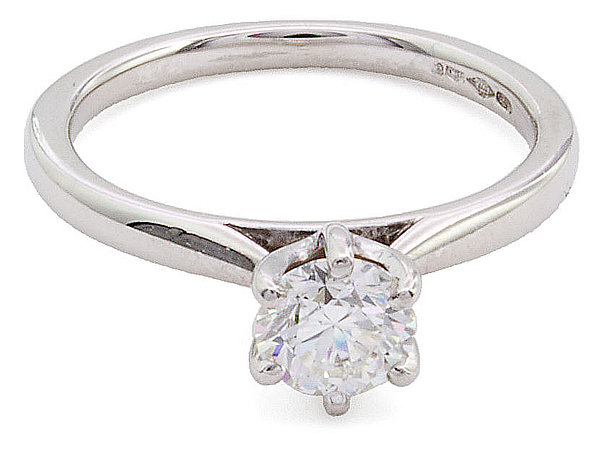
Diamond set in platinum, it will last a long time.
Like gold, platinum will not tarnish in normal use.
However, unlike gold, pure platinum is very hard, and this makes
it difficult to work, which makes platinum jewellery expensive
It used to be as expensive as pure gold, but the price has dropped a lot, and it's now cheaper
than 9ct gold! The reason is that it used to be used in catalytic converters, but palladium is now the
most popular metal.
When new its colour is similar to silver, but it slowly wears to
a dull grey - but as platinum is very hard, the change is slow.
You can't polish it at home, but a jeweller can restore its
bright finish.
When manufactured into jewellery it is also the most pure of the
metals, normally 95% of the alloy is platinum, although other
standards are now legal. Until 1975 platinum was not hallmarked,
therefore the exact purity of the metal used cannot be known for
certain. Since 1999 lower standards for platinum are permitted in
the UK.
You won't see many items made from platinum. But they will
wear better than other jewellery, so they are worth
considering. Diamonds are often set in platinum even when
the rest of the piece is gold. The hard platinum ensures
the valuable stones are secure for many years.
Repairs are unlikely, but the hardness of the metal means that sizing rings will be a lot
more expensive than resizing gold rings.
Apart from jewellery, platinum is also used in laboratories,
because it doesn't react with other chemicals. The
assay offices use it for crucibles when testing gold or
silver.
Palladium
Palladium is in the Platinum metal family, and shares many of the same qualities.
It's slightly harder than platinum. It's similar in price to platinum, but it's also lighter, so
a palladium ring will be lighter than the same ring is platinum, so a palladium ring will be cheaper!
Since 2010 palladium jewellery has been hallmarked in the UK. There is a problem with purity, palladium can
be hallmarked and sold as palladium when it only contains 50% of the metal! Do check before buying.
The hardness of the metal does mean ring sizing will be expensive, compared to gold.
Back to top
Titanium
A strong, light metal with considerable resistance to
corrosion. It was first discovered 200 years ago (most metals have been known since antiquity), and is
only now appearing in jewellery.
At first, most titanium jewellery was coloured, because the metal
is easily anodised with bright colours, which retained the
toughness of the metal and so lasted well. However now we
are seeing titanium in its natural white colour.
The main use of the metal is in aerospace, aircraft skins are
largely made from titanium, and it is a major metal in
spacecraft. If it's strong enough to go into space, it
should make good, long-lasting jewellery!
Back to top
